Showing posts with label clay oven. Show all posts

Saturday, December 4, 2010

Clay Oven Part 4


Clay Oven Part 4

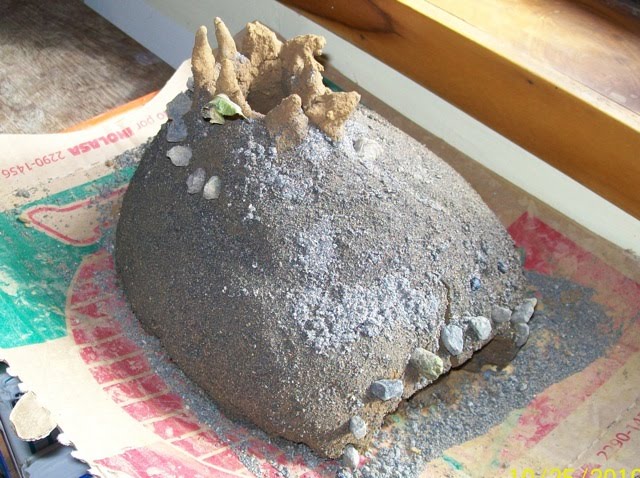
Doug, Julie, their children and other helpers made huge progress last weekend and finished the oven. The last blog shows the oven with its first layer, a clay and sand mix that will absorb and retain heat. The second layer is a 4-inch layer of clay and sawdust mixture. The sawdust will help insulate and keep the heat directed toward the interior. Finally the exterior 2-inch layer is a mixture of clay and straw. The straw was cut into finger length pieces and is the ‘rebar’ that adds strength to the structure. Decoration at the top and a ceramic mosaic on the base not only expresses the artistic creativity of the builders but helps to produces an awe for all onlookers.

We will not use the oven for at least a few weeks as it slowly dries in the open wood shed. Too much heat too early could result in cracking and crumbling and negate the incredible effort of the hundreds of hours put into it. Fortunately, the arrival of the windy season will aid in moisture evaporation and since it is under a roof and has walls on three sides, it will not be subject to the frequent mists we receive this time of year. Its first fire, in a couple of weeks, will consist of a single candle and then it will gradually receive large flames until this big baby is ready to join the ranks of 800 degree, 90 second pizza cooking professionals. The timing during the holiday season is quite nice as well, but I don’t think we’ll be able to cook a feast until January. That is the plan, so we will see how it evolves.

It is a great project – a combination of community effort, learning new skills, getting hands and feet wet, experimenting and wondering, exploring with design and artistic ideas, finding local resources and getting to know each other.

Some additional thoughts:

Construction: The materials one chooses to build an oven depends on overall philosophy and goals. Do you try to use only natural and locally available materials, or will you use fabricated materials such as metals and fiberglass insulation, or will you use some type of combination? Are you aiming for low labor intensity or do you have many eager hands that want to be busy? Are you concerned about cost or have specific time limitations?

Function: How long will the oven last? How will the high humidity levels here affect its longevity and function? What fire building techniques will we use to maintain consistent and even heat? How can we best utilize the oven for special events and how will we pass on the fire building skills?

Signed M

Saturday, November 27, 2010

Clay Oven Part 3


We made a lot of progress this week. The concrete block base was filled with rocks, gravel and is high enough in order to place the oven’s opening at a comfortable and practical level. Near the top, a layer of empty glass bottles is embedded between two layers of clay/sawdust mixture. The bottles and sawdust act as a thermal barrier to prevent heat loss through the oven’s bottom. On top of the clay, sits loose sand, carefully laid firebricks, and a sand/clay ‘plaster’ to act as an external shelf. Finally, we started to raise the oven itself! We constructed a sandcastle dome with a 63% height to width ratio, which someone figured was the optimum internal ratio to foster proper air movement inside the oven. The sand was covered by newspaper divider and then a 4-inch layer of clay, which will be the inner most part of the oven structure. Things have taken shape quickly this week and I think we will add an insulation layer and a decorative surface this coming week.

I’ve been able to contribute a little between classes or afterschool and invite the rest of the Monteverde community to stop by and get their hands in the mush. I will run up there today- maybe in the afternoon and also catch a game of ultimate Frisbee.

Signed M

Saturday, November 20, 2010

Clay Oven Part 2


To get clay for the oven, a hole was dug in a nearby embankment. Well, why just dig for clay when you can create an oven directly in the earth? This past Thursday, our group made quick campfire dough and cooked them in the ‘earthen’ oven. The students gathered sticks, started a hot fire, discussed the heat and its direction and location while attempting to cook the loaves. We spread the fire out and placed the pan directly over the burning embers. Our result: A black and crisp bottom and a soft gooey top and a middle just deliciously right.. This coming week, there should be progress on the main oven and maybe a cooked turkey drumstick or two on Thanksgiving.

Saturday, November 13, 2010

Clay Oven Part 1


Each Thursday afternoon, students at MFS get a break from regular classes to participate in a Minicourse. Student select from a variety of offerings at the beginning of each quarter and its gives them a chance to work in a multiage group on or off campus. The minicourses are led by teachers, parents, other community members or visitors are designed to be experiential and a time when we all learn new skills.

Over the past year plus, my personal favorites have been Frisbee and woodworking. I’ve led kitchen chemistry and other science related courses, but since I already have much experience in those areas, it’s the new topics that create the most excitement and growth.

This quarter, I and a group of eleven students are working with a family visiting from Vermont to build a clay oven. We have built prototypes using mixtures of clay and sand and are now working on the real deal. I did not realize how big a project this is until we had a list of necessary and desired materials, collected them, and learned that this project could take many months if we worked only on Thursday afternoons. Our goal is to build a working oven large enough to bake bread or a few pizzas with local materials, keep costs to an absolute minimum, and to utilize the muscle, skills and knowledge of the community.

The site we chose, the wood shed behind the school, needed some organizing to free a large enough space for the oven. Last Saturday, a group of us carefully moved wood while keeping our eyes open and alerting others when we encountered nails and scorpions. Before picking up anything, we tapped and kicked or pried things up before putting our hands anywhere - not one snake.

This past Thursday, our group hauled wheelbarrows and buckets of sand, rock and concrete blocks to the site, a woodshed behind the school. After moving two tons of materials, the students ceremoniously placed in the first row of blocks on a bed of level gravel. The visiting family, the brains and primary muscle, of the operation, arrived very early Friday AM to continue the work and I will be meeting them shortly to help with the massive base.